Industrial Cooling Decarbonization Across Industries & Infrastructure Sectors
Industrial cooling decarbonization across industries requires sector-specific engineering analysis, structured energy modelling and execution-aligned transition planning.
Industrial Cooling Decarbonization Across Industries: Sector Applications
Industrial Cooling Decarbonization Across Industries requires sector-specific performance diagnostics, energy modelling and structured implementation alignment to reduce cooling system energy intensity while maintaining operational stability.
While our primary focus is on FMCG and pharmaceutical manufacturing due to their high cooling intensity and operational sensitivity, our engineering-led methodology applies across data centres, district cooling networks, commercial facilities and continuous process industries.
Pharmaceutical Manufacturing
Industry Context
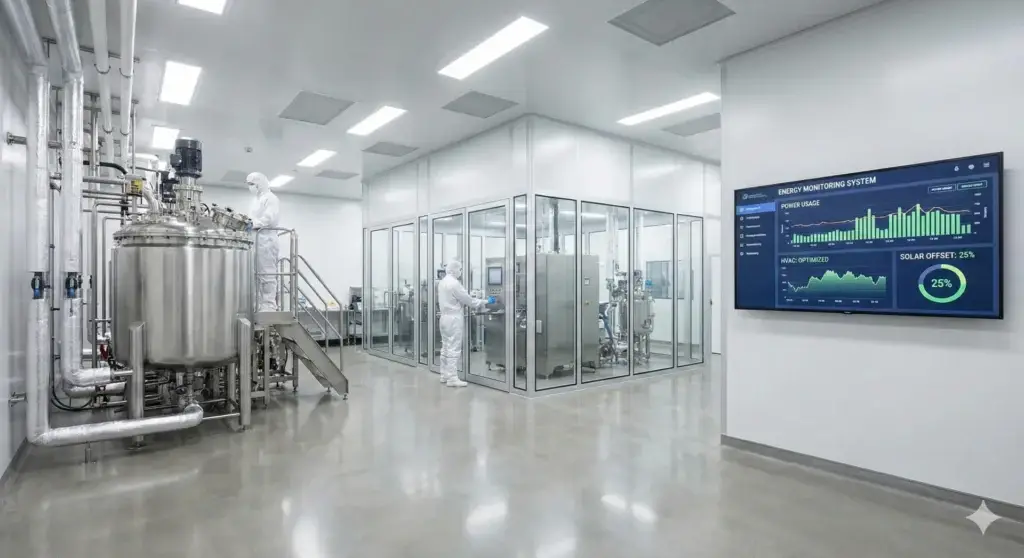
Pharma facilities operate under strict temperature, humidity and validation requirements, making cooling systems critical to compliance and product integrity.
Typical Challenges
• High cooling loads with process variability
• Redundant chiller capacity operating inefficiently
• Rising peak demand charges
• Electrification constraints
How deCO2e Supports
• TES feasibility aligned to GMP operations
• COP optimization without operational disruption
• Peak demand management strategies
• Structured carbon reduction roadmap
Pharmaceutical facilities demand stable chilled water temperatures, cleanroom reliability and uninterrupted operations. Our approach ensures energy optimization without compromising GMP compliance, validation protocols or operational continuity.
FMCG & Food Processing
Industry Context
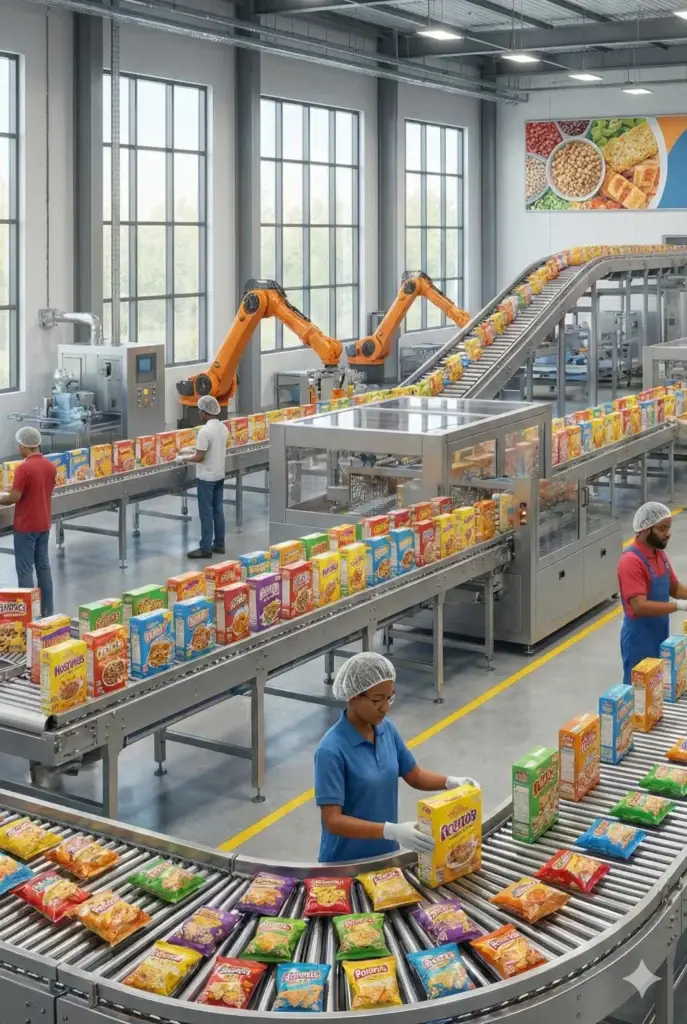
Continuous operations and refrigeration-heavy processes result in significant cooling energy intensity.
Typical Challenges
• High refrigeration energy cost
• Load variation across shifts
• Cold storage inefficiencies
• Expansion planning without energy optimization
How deCO2e Supports
• Load profiling and TES assessment
• Refrigeration system optimization
• Energy intensity benchmarking
• Cost-per-unit cooling reduction strategies
FMCG plants often operate under seasonal demand swings and refrigeration-heavy processes. We focus on reducing peak demand exposure, optimizing chiller efficiency and identifying thermal energy storage opportunities with measurable ROI.
Process & Chemical Industries
Industry Context
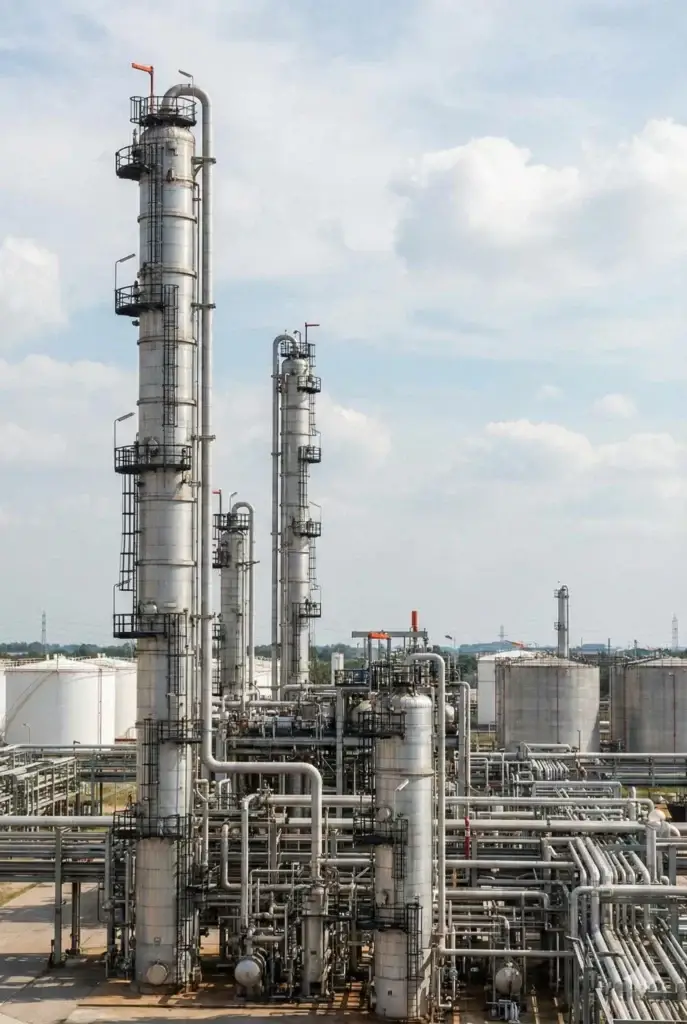
Process cooling is often integrated with production lines, creating operational constraints for optimization.
Typical Challenges
• Oversized chiller plants
• Poor hydraulic distribution
• Inefficient heat rejection
• Carbon compliance pressures
How deCO2e Supports
• Cooling plant diagnostics
• Heat rejection optimization
• Electrification pathway modelling
• Structured implementation oversight
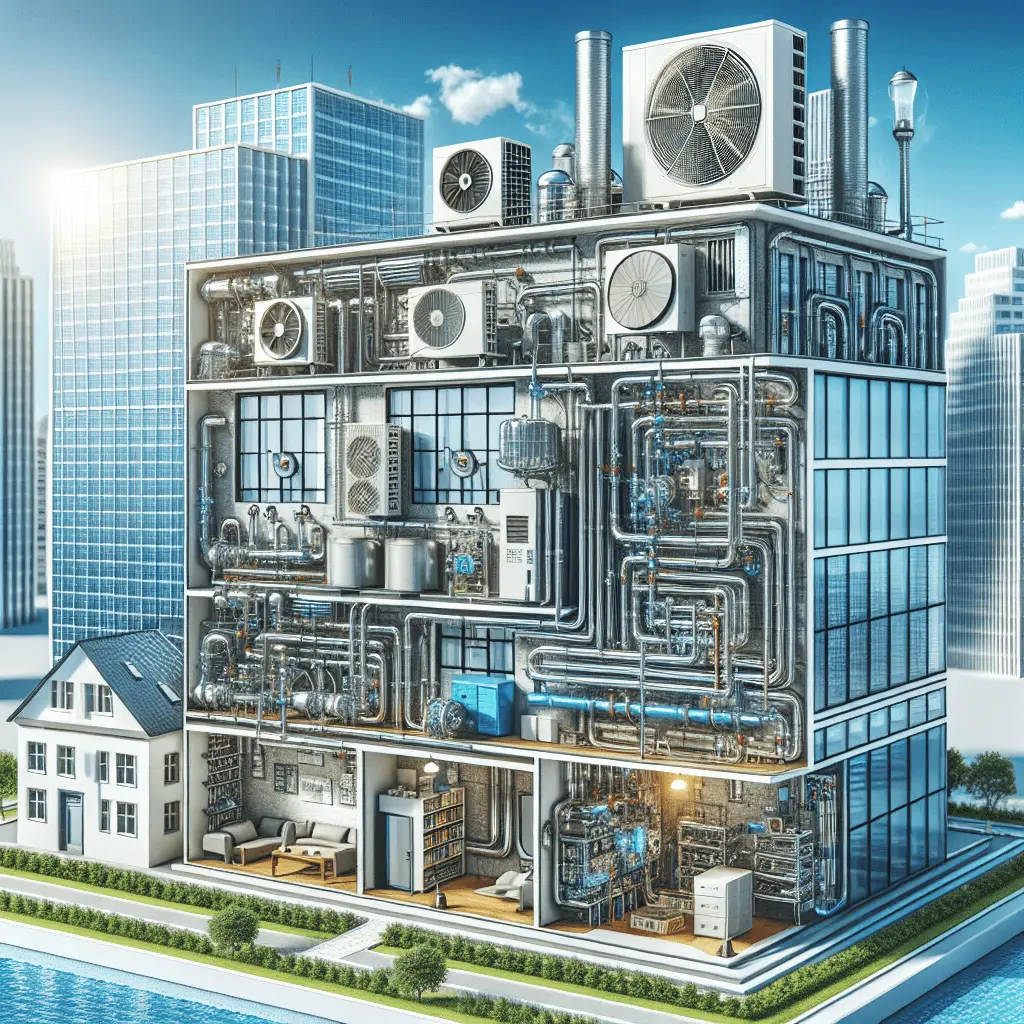
Cooling Commercial Facilities
• Central plant optimization
• TES integration strategy
• Peak demand modelling
• Energy performance benchmarking
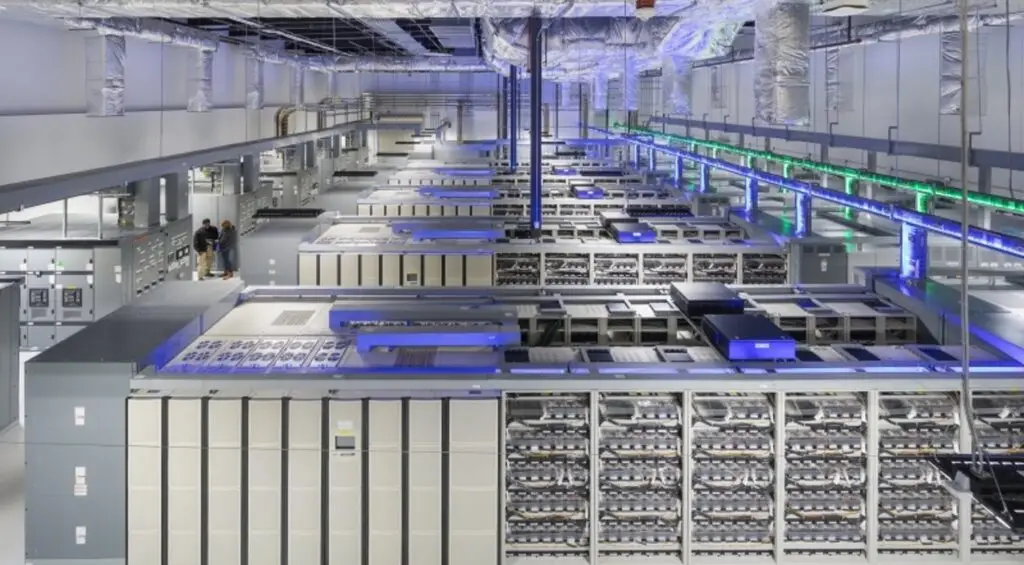
🖥 Data Centers & Mission-Critical Facilities
Industry Context
Data centers operate with continuous high cooling loads where system efficiency directly impacts PUE, operating cost and carbon exposure.
Typical Challenges
• High cooling energy intensity
• Under-optimized chiller and heat rejection systems
• Limited peak demand flexibility
• Pressure to meet ESG and decarbonization targets
How deCO2e Supports
• Cooling plant performance benchmarking
• TES feasibility for peak management
• Heat rejection optimization strategy
• Structured decarbonization roadmap
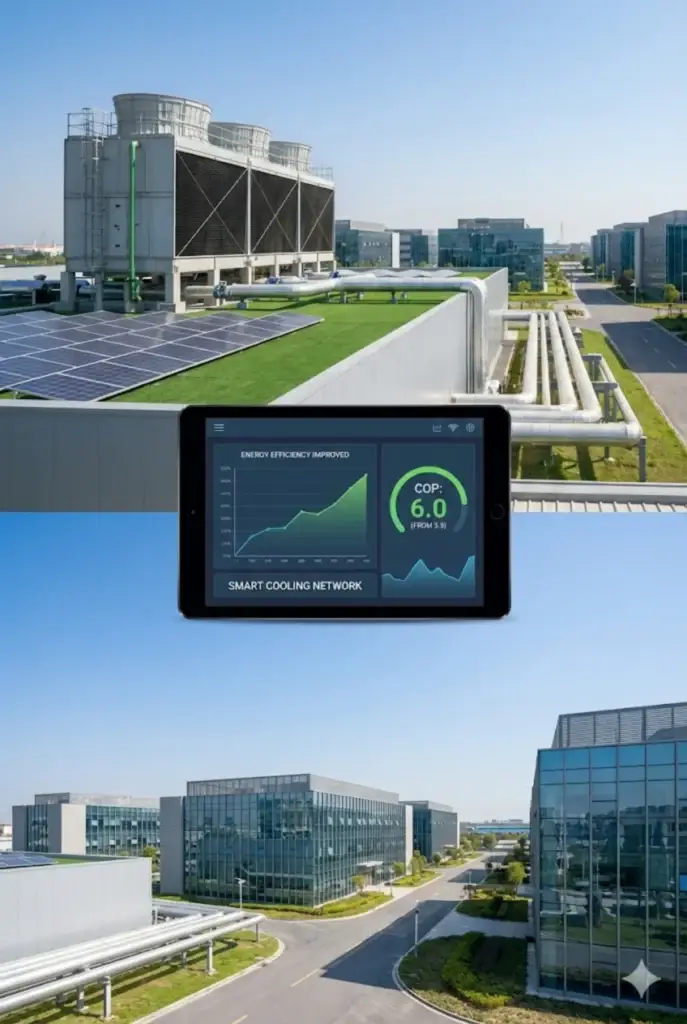
❄ District Cooling & Industrial Parks
Industry Context
Data centers operate with continuous high cooling loads where system efficiency directly impacts PUE, operating cost and carbon exposure.
Typical Challenges
• High cooling energy intensity
• Under-optimized chiller and heat rejection systems
• Limited peak demand flexibility
• Pressure to meet ESG and decarbonization targets
How deCO2e Supports
• Cooling plant performance benchmarking
• TES feasibility for peak management
• Heat rejection optimization strategy
• Structured decarbonization roadmap
Engineering Outcomes Delivered Across All Industries
Across sectors, cooling systems typically represent 30–60% of total electricity consumption in energy-intensive facilities. Industrial Cooling Decarbonization requires more than equipment upgrades — it demands structured load analysis, COP benchmarking, tariff modelling, hydraulic correction and strategic thermal energy storage integration. Our methodology ensures peak demand reduction, energy performance stabilization and measurable carbon intensity improvement while maintaining production continuity and regulatory compliance.
- Reduce energy cost per TR.
- Improve system COP.
- Lower peak demand.
- Reduce carbon intensity.
- Enable structured energy transition.
Strategic Impact of Industrial Cooling Decarbonization
Industrial Cooling Decarbonization directly influences operating cost stability, ESG performance metrics and long-term asset value. In many facilities, cooling infrastructure represents the single largest controllable electricity load. By improving system COP, correcting hydraulic imbalances, optimizing control logic and integrating thermal energy storage where viable, organizations can reduce peak demand exposure and improve energy intensity without production risk. Structured engineering analysis ensures capital is deployed only where measurable ROI and carbon reduction potential are validated through data-driven modelling.
According to the International Energy Agency (IEA), industrial energy efficiency remains one of the largest untapped decarbonization opportunities globally.
Discuss Your Industry-Specific Cooling Challenge
Our Industrial Cooling Decarbonization Across Industries framework ensures measurable COP improvement, peak demand control and structured carbon reduction across diverse facility types.