Cooling Plant Optimization Services for High-Performance Industrial Facilities
Cooling Plant Optimization Services designed to improve system COP, reduce peak demand exposure and enhance long-term energy efficiency through structured engineering diagnostics and execution oversight.
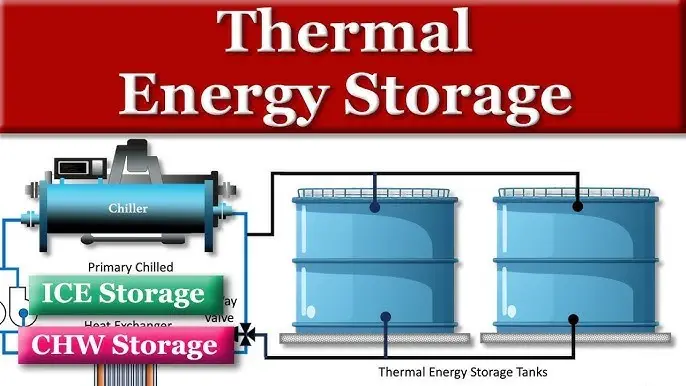
Thermal Energy Storage Feasibility & ROI Modelling
Problem Context
Industrial cooling systems often operate during peak tariff windows, increasing demand charges and energy cost volatility.
Our Approach
We conduct structured load profiling, tariff analysis, peak demand mapping and TES suitability assessment before capital deployment.
What We Deliver
• Peak demand reduction modelling
• Tariff arbitrage evaluation
• Chiller-TES integration strategy
• CAPEX vs savings analysis
• Carbon impact quantification
• Implementation roadmap
Outcome
Clear investment decision backed by engineering and financial modelling.
Peak Demand Optimization & Tariff Strategy
Problem Context
Industrial cooling systems often operate during peak tariff windows, increasing demand charges and energy cost volatility.
Our Approach
We conduct structured load profiling, tariff analysis, peak demand mapping and TES suitability assessment before capital deployment.
What We Deliver
• Peak demand reduction modelling
• Tariff arbitrage evaluation
• Chiller-TES integration strategy
• CAPEX vs savings analysis
• Carbon impact quantification
• Implementation roadmap
Outcome
Clear investment decision backed by engineering and financial modelling.
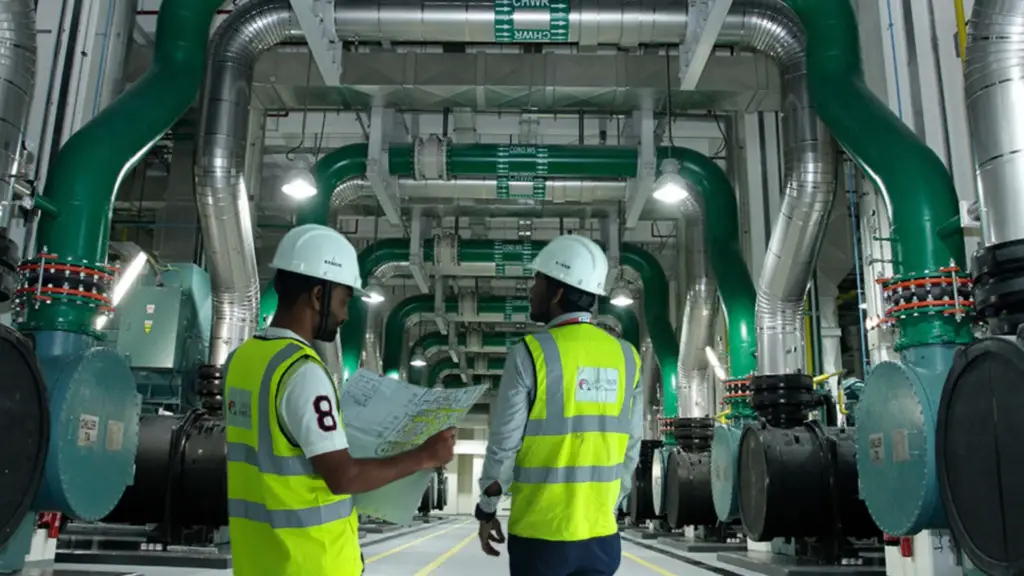
Cooling Plant Optimization Services & Performance Correction
Problem Context
Most chilled water systems operate 15–30% below optimal COP due to hydraulic imbalance and control misalignment.
Our Approach
System diagnostics, COP benchmarking, control strategy review and hydraulic correction planning.
What We Deliver
• COP gap analysis
• Pump and flow optimisation
• Control logic refinement
• Heat rejection evaluation
• Performance benchmarking
Outcome
Measurable reduction in energy consumption per TR and improved operational stability.
Beyond immediate efficiency gains, long-term performance stability is equally critical. Continuous monitoring, periodic benchmarking, and structured operational reviews ensure that improvements are sustained over time. Without governance mechanisms, many efficiency gains gradually erode due to control drift, load variation, or maintenance gaps. A structured advisory approach helps protect both energy savings and asset reliability.
Performance improvements are often aligned with ASHRAE efficiency standards.
Problem Context
Decarbonization targets require structured electrification planning aligned with operational realities.
Our Approach
Evaluate electrification pathways, heat pump integration and load transition planning.
What We Deliver
• Electrification roadmap
• Industrial heat pump feasibility
• Carbon intensity modelling
• Risk and implementation mapping
Outcome
Practical phased transition plan with measurable energy and carbon impact.
Execution & Vendor Sourcing Support
Diagnostic Assessment
Engineering & Financial Modelling
Technology & EPC Alignment
Implementation Oversight
Why Industrial Cooling Decarbonization Matters
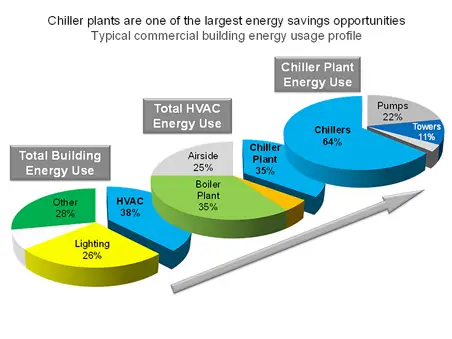
Industrial cooling plants represent one of the largest energy loads in commercial and industrial facilities. Rising electricity tariffs, peak demand penalties, and tightening carbon disclosure norms are increasing operational risk for plant owners. Without structured engineering analysis, many facilities operate 15–30% below optimal efficiency. Industrial Cooling Decarbonization Services help organizations reduce energy intensity, improve asset performance, and align with ESG and sustainability targets while maintaining operational reliability.
According to the International Energy Agency (IEA), cooling demand is one of the fastest-growing sources of electricity consumption globally.
Typical Challenges in Industrial Cooling Systems
• High peak demand charges
• Low chiller COP under part load
• Hydraulic imbalance and pump oversizing
• Poor integration of TES systems
• Control logic inefficiencies
• Electrification roadmap uncertainty
Many of these inefficiencies remain hidden within normal plant operation because systems continue functioning despite underperformance. Without structured diagnostics and financial modelling, decision-makers often lack the clarity required to justify corrective investments.
Our Engineering-Led Methodology
Diagnostic data capture & load profiling
Energy and tariff modelling
Technology feasibility validation
Financial ROI assessment
Implementation oversight
Our Cooling Plant Optimization Services integrate COP benchmarking, hydraulic correction, control sequence refinement and thermal energy storage feasibility to deliver measurable operational improvement.
Our methodology combines engineering diagnostics with financial modelling to ensure every recommendation is technically viable and commercially defensible. Rather than generic benchmarking, we analyze real operational data, geo-specific tariff structures, hydraulic performance, and system controls to identify measurable efficiency gains. Each intervention is evaluated for ROI, carbon impact, implementation complexity, and operational risk.
These Cooling Plant Optimization Services ensure performance stabilization, energy cost control and structured decarbonization outcomes.
Discuss Your Cooling Energy Challenge
Schedule a consultation to evaluate how our Industrial Cooling Decarbonization Services can reduce energy cost and carbon risk.